Book Review
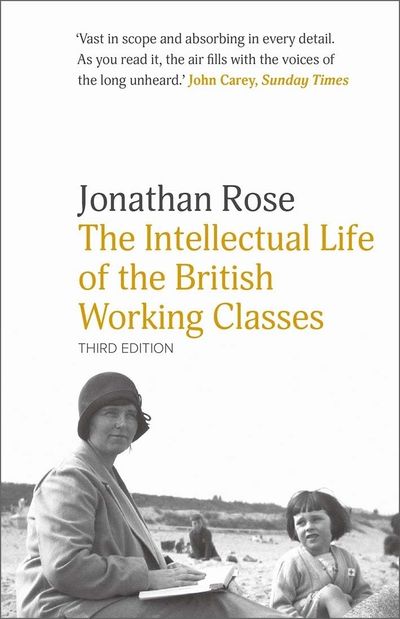
The Intellectual life of the British Working Classes - Jonathan Rose
Yale University Press , New Haven and London (2001)
I was walking by McDonald Road near Leith in Edinburgh and I walked past a mother and a child in a pram, who had stopped to look at a box at the side of the road named ‘Little free library - take a book and leave a book’. In it they could read books of all genres from fiction to biographies to finance. This scene reminded me of the circulating libraries held by Shepards of Cheviot Hills in the 19th century Scotland where the books would be kept in designated crannies in boundary walls for the next Shepard passing by to read while travelling, or the East Lothian Itinerating libraries in the 1800s volunteered and run by teachers , weavers ,miners, smiths , saddlers and other working class people.
The Intellectual life of the British working classes by Jonathan rose has many such stories giving an elaborate account of the intellectual fervour of the working classes in Britain that has existed through its history. Published in 2001 just prior to the start of the Social media age which has taken away our attention spans, this book chronicles how working class men and women - coal miners, weavers, mill workers, shop keepers, peasants, delivery men, cobblers, insurance clerks etc built their intellectual lives.
Autodidacts - The working class taught itself
When Famous self learned German writer Carl Moritz visited England in 1782 he observed ‘ The common people in England read their English authors’ . Jonathan Rose details with examples of how the working class who did not have anyone to guide and didn’t have time , money nor persuasion to better their lives had to rely on themselves for their betterment. Many stories detail how these people were groping away through books and easily available publications. They were reading works by writers - religious to classical literature to penny dreadfuls (cheap comics and storybooks) , and even advertisements and writing on shop stands on the streets of London were used as learning. They created self education societies , libraries and associations like Workers Education Associations (WEA) . At one point in history almost every coal mining town in Britain had a Self education association and libraries run and maintained by workers for workers. There are stories of how trade union leaders and politicians and MPs of the labour movement post and pre world wars , popular writers , news paper reporters , novelists , film directors were created through self education. The book contains stories like Patrick Macgill (b. 1890) a son of an illiterate Donegal peasant after leaving school at age ten to pick potatoes and work as a navvy was able to because of his ‘ravenous’ reading ability (which he realised while working on a rail line after reading a piece of poetry written on a exercise book) to become a popular novelist and writer for the Dawn newspaper. He used to set aside a few shillings to buy second hand books.
In the present world where everything is commoditised and transactional , It was also heartening to see how managers and other workers around these autodidacts encouraged their talents and helped them progress. Story of Richard Church (1900s), a postman son who was an civil service clerk, found himself being supported by his friends, monitors , advisors, colleagues. They provided resources and encouraged him to achieve becoming a novelist.
There were publications and periodicals that were designed for the welfare of the working classes . The Edinburgh Chambers journals , Peoples papers , Popular Educator , Everyman Magazine , Pearsons weekly. These publications which were affordable and easy to read and were guide to many leaders like Kier Hardie, Ramsay Macdonald , John Wilson to educate themselves.
Read Everything
It is evident from history that there is no need for any restrictions of reading based on your political leanings. Many radicals and socialists read enormous amount of classical literatures, religious text and other ideologies . Being an omnivorous reader has produced famous authors. The story of Catherine McMullen (b.1906) a workhouse laundress who went onto become a best selling author of ninety novels and whose work sold for 100 million copies used to read conservative writings like Letters of lord Chesterfields to his sons. Socialist agitators and intellectuals like Walter Hampson (b.1866), A.Jackson (b.1879), encouraged reading Walter Scott novels. Like John Johnson MP from Northumberland in 1906 mentioned in ‘How I got on’ in Pearsons weekly that ‘ if men do not vary his reading , he is likely to suffer from Literary Indigestion’
.
Working people don’t read as much as they did before
Reading has become a chore for people in present times. One recent study suggests only 1 in 5 (18.7%) children and young people aged 8 to 18 said that they read daily. Nearly half of UK adults (47%) do not read regularly with 40% of people not reading a single book in the past year. Only a meagre 19% of Uk adults read regularly. The degradation has been significant since the Covid - 19 pandemic and the increase in the use of screens via social media in phone, tablets or Television. A significant gap persists in educational outcomes ; in 2024, 49% of 18-20 year olds from higher professional backgrounds entered higher education, versus 25% from lower working-class backgrounds as according to Open Data UK. This affects social mobility and lack of reading has been at the forefront of this.
This book has inspired me to look at books and literature with great respect (has also made me spend a lot on books this Christmas). It has also given me hope that all is not lost for people who have no guidance , connection or background of the intellectual elite to still learn the joy of reading.
Author : Sennaya Swamy Naickar
Edited By : Natalie Reid
08th January 2026